The Connection Between Missing Teeth and Facial Changes
A missing tooth changes more than the appearance of your smile. Natural tooth roots transfer stimulation to the jawbone when you bite and chew. After a tooth is lost, that stimulation decreases, and the surrounding bone can gradually change.
As bone volume diminishes, the lips and cheeks may lose some of their underlying support. With extensive tooth loss, these changes can contribute to a sunken or prematurely aged appearance. Every person is different, and the pace of change depends on many factors, but replacing missing teeth can play an important role in restoring function and supporting facial harmony.
Let’s take a closer look to explore how dental implants can improve your facial structure over time.
How Dental Implants Support the Jawbone
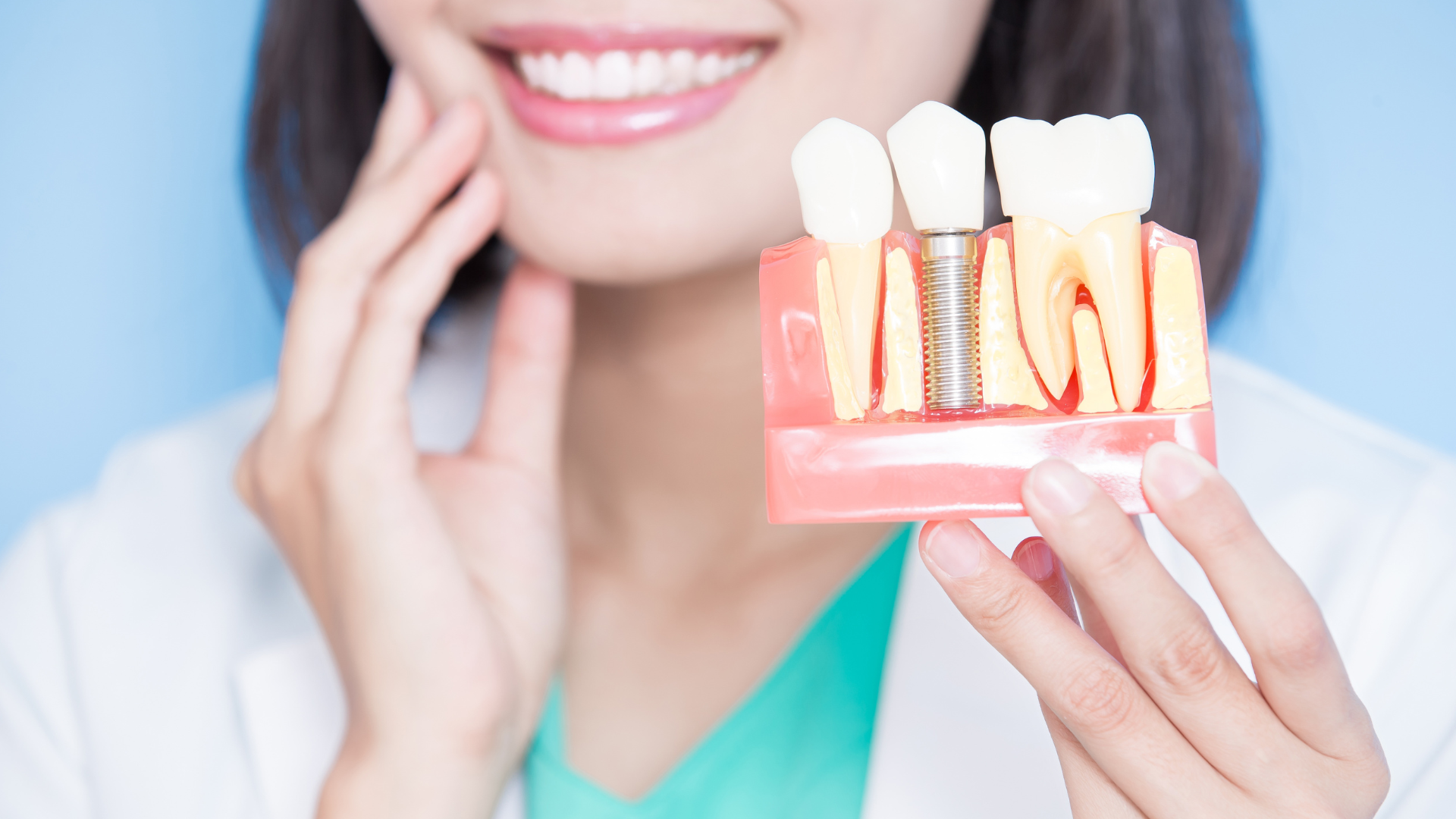
A dental implant is placed in the jawbone to act as an artificial tooth root. During healing, the implant can integrate with the surrounding bone through a process called osseointegration. Once restored with a crown, bridge, or full-arch prosthesis, the implant provides a stable foundation for biting and chewing.
Unlike a traditional removable denture that rests on the gums, an implant-supported restoration transfers functional forces into the jaw. This does not freeze your facial structure in time or eliminate every possibility of future bone change.
It does, however, offer a tooth replacement approach that engages the jawbone in a way conventional dentures do not. The result can be a smile that looks natural, feels secure, and gives you the confidence to enjoy a broader range of foods.
Restoring Support for Your Lips and Cheeks
Teeth help shape the lower third of your face. They support the lips, influence facial proportions, and help maintain the distance between the upper and lower jaws. When several teeth are missing or severely damaged, that support can be reduced.
A carefully designed implant restoration can rebuild appropriate tooth position, shape, and height. That may improve support for the lips and cheeks while creating a more balanced profile. The goal is not to make you look like someone else. It is to restore proportions that complement your features and help your smile feel like your own again.
Digital scans and three-dimensional imaging allow us to plan with exceptional precision. Dr. Ormaza can evaluate bone anatomy, restoration space, bite relationships, and your smile goals before recommending treatment.
Single-Tooth, Multiple-Tooth, and Full-Arch Solutions
Dental implants are remarkably versatile. One implant with a crown may replace a single missing tooth without relying on neighboring teeth for support. An implant-supported bridge can replace several teeth in the same area. For extensive tooth loss, a fixed full-arch restoration may replace an entire upper or lower arch using a planned number of implants.
Smilodon Dental provides implant placement and restoration within one practice. No need for several visits across two, three, or more dentists and oral surgeons. Instead, Smilodon Dental offers an unrivaled continuity of care from start to finish.
If you prefer a removable option with greater stability than a conventional denture, implant-supported overdentures may also be considered. We will explain the differences in comfort, maintenance, cost, and function so you can make an informed decision.
Why Timing Can Matter After Tooth Loss
Bone changes can begin after a tooth is removed, which is one reason to discuss replacement options early. Early planning does not mean every implant must be placed immediately. Your mouth may need time to heal, and infection, bone availability, gum health, medications, smoking, and medical conditions can influence timing.
If bone volume is limited, grafting or another preparatory procedure may be recommended. Modern implant dentistry gives many patients more options than they expect, but only a detailed evaluation can determine what is appropriate for you.
Protecting Your Results for the Long Term
Dental implants cannot develop cavities, but the gums and bone around them still require excellent care. Brush twice daily, clean carefully around the restoration, and follow the specific tools and techniques we recommend. Regular professional visits help us monitor your gum health, bite, restoration, and surrounding bone.
Tobacco use, uncontrolled health conditions, poor home care, and untreated gum disease can increase complications. Honest conversations about your health help us protect your investment. We are here to support you, not judge you.
Restore Your Smile at Smilodon Dental
At Smilodon Dental, Dr. Ormaza combines extensive implant experience with advanced 3D technology and personal, bilingual care. Whether you need a routine dental exam or more extensive implants, Smilodon Dental is your one-stop shop. Contact us today!
Frequently Asked Questions
Can Dental Implants Prevent All Facial Aging?
No. Facial aging has many causes. Dental implants can support the jawbone and restore tooth-related facial support, but they do not stop natural aging.
Can I Get Dental Implants If I Have Bone Loss?
Possibly. Some patients need bone grafting or another preparatory procedure. A 3D evaluation helps us determine which options may be appropriate.
Do Implant-Supported Teeth Look Natural?
They can look exceptionally natural when tooth shape, color, position, gum contours, and bite are carefully planned for your face.
How Do I Begin the Dental Implant Process?
Start with a personalized consultation. We will review your health, take appropriate images, evaluate your smile, and discuss treatment and payment options.